Hostage Rescue Situations, II: Civilian

Whether we like it or not,
the one justification for the existence of all religions is death,
they need death as much as we need bread to eat
--Death with Interruptions,
Jose Saramago,
The thing that hath been, it is that which shall be;
and that which is done is that which shall be done:
and there is no new thing under the sun
--Ecclesiastes 1:9
When people show you who they are,
believe them the first time
--Maya Angelou
the one justification for the existence of all religions is death,
they need death as much as we need bread to eat
--Death with Interruptions,
Jose Saramago,
The thing that hath been, it is that which shall be;
and that which is done is that which shall be done:
and there is no new thing under the sun
--Ecclesiastes 1:9
When people show you who they are,
believe them the first time
--Maya Angelou
______________________
Subtitle: Chicken Little, or, The Lone Wolf
Scenario: Sydney (AUS) hostage crisis, 15-16 December 2014.
Scenario: Sydney (AUS) hostage crisis, 15-16 December 2014.
The media reported yet another Lone Wolf Islamic gunman took hostages at the Lindt Chocolate Cafe in Sydney; two hostages and the hostage taker were later killed. But how -- or does -- this situation differ from hostage situations that preceded it?
Instant analysis provided by hasty experts lead to the speedy disappearance of any discrete event from the headlines in favor of the next shock and awe event, and any lessons to be found in commonalities are lost in the relentless quest for the new. So what's new and what's not?
All hostage taking is criminal behavior, and law enforcement exists deal with such events. The laws already exist in the legal codes of all civilized nations. Motives, tactics and response times may differ, but there is always a police response that is appropriate. Sydney is but another in the ignominious history of the hostage taking event. While there is no comprehensive list online, one can begin ticking off the scores of events in recent memory:
Instant analysis provided by hasty experts lead to the speedy disappearance of any discrete event from the headlines in favor of the next shock and awe event, and any lessons to be found in commonalities are lost in the relentless quest for the new. So what's new and what's not?
All hostage taking is criminal behavior, and law enforcement exists deal with such events. The laws already exist in the legal codes of all civilized nations. Motives, tactics and response times may differ, but there is always a police response that is appropriate. Sydney is but another in the ignominious history of the hostage taking event. While there is no comprehensive list online, one can begin ticking off the scores of events in recent memory:
Moluccan separatists (Holland, 1977); DFLP Ma'alot massacre (Israel, 1974); numerous aircraft hijackings, beginning in the 1930's; Mumbai hotel (Lashkar-e-Taiba, 2008); Chechen theater takeover (Russia, 2002); Grozny (Caucasus Emirate, 2014); Beslan School Siege (Chechen, 2004); Grand Mosque seizure (Mecca, Saudi Arabia, 1979); Munich Olympic massacre (Palestinian Black September,1972); OPEC ministers (Carlos the Jackal + German and Arab terrorists, 1975); Iran embassy takeover (1979); Iranian Embassy siege (London, 1980); Raid at Entebbe (Uganda, 1976); Norrmalmstorg robbery (Sweden, 1973) -- origin of the "Stockholm Syndrome", etc.
"Lone Wolves" are nothing new. The "shoe" and "underwear" bombers were also lone wolves. Anyone who attempts such an illegal and audacious action is by definition a lone wolf, even if representing a larger group. Most lone wolves are backed by a much larger transnational support system facilitating their operations.

Our negligence allows these people to slip through the cracks and fly under the radar. Since the agencies tasked to ensure our safety are often no more than theater, look for the attacks to continue. The people leading these agencies often lack a police or security background
The police operate on the belief that all life is sacred, including that of the hostage-taker; but if intel indicates the hostage takers will execute hostages, then police must end the situation by assault. The police assault differs from the military one, however.
When the SEALs entered Yemen their assault was a predetermined, essential part of their plan. In contrast, a police assault should be effected only to prevent further loss of hostage lives. As the police assault phase is fluid, hostage lives always hang in the balance. In Sydney, the police had no option as all intel indicated the hostage taker was intent on killing his hostages.
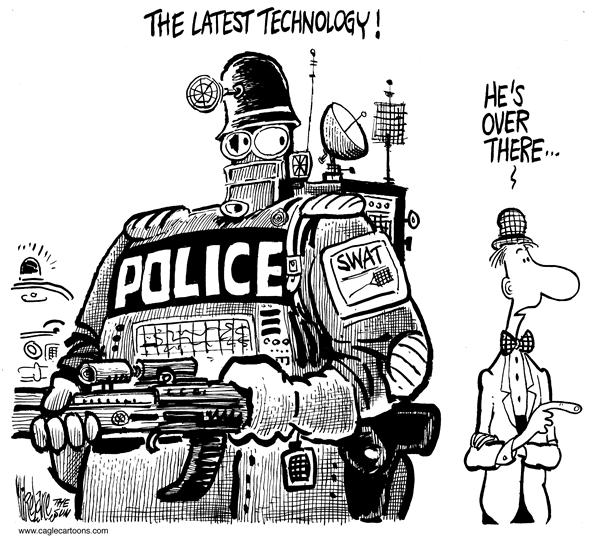
The only critical observation in the Sydney scenario is that the police may have used too much firepower when they employed fully automatic fire. Prudence in the civilian setting may call for less rounds fired in select single fire mode to avoid accidentally killing hostages. A police response should always be measured, but it is always a judgement call for those on-site.
Hostage barricade situations are not going away, but the Western world has levels of security which can address any criminal activity, to include terrorism. The Euroterrorism of the 1960-90 era was effectively neutralized by good police work, intel and counteraction efforts, without governments crossing into authoritarian mode. The same comment will be made 30 years from now about today's "Lone Wolves".
Today's Lone Wolves do not differ much from their predecessors: they want to broadcast a message, and they often seek to gain ransom for further operational funding. Individually, they seem to be nihilists who do not value their own lives. However, their actions continue to support the viability of their group (=the Islamic State), even if they were not directly affiliated with the group to which they claim fealty.
As an aside: What hath the media and its mandatory political correctness wrought by feeding us the line that Islam is a religion of peace? It keeps us in a state of unknowing, children who must act shocked each time we put our hands on the stove and it burns. Certainly there are good Muslims, but the intermittent terrorist act will continue to erupt from that unsettled pool and we must be stoic in our application of established police protocol.
To deny that there is a large swath of "bad" Muslims who rejoice in their 10th century ethos is to be willfully blind to a movement taking over large swathes of the Middle East and Asia. To paraphrase Sam Kinison, it's called The Islamic State, people. "Bad" to us is "good" to them, and never the twain shall meet.
Our fundamental worldviews are different ... it is not simply a matter of the West disbursing a few more palletized bundles of Benjamins, or more education or fruit juice boxes at the Loya Jirgas. We are as puppets on a string when we recoil in horror at the beheading du jour.
What's new is the environment of fear fomented in the press.
[cross-posted @ milpub.]
Labels: hostage barricade, hostage negotiations, hostage rescue, hostage scenarios, hostage taking, hostages, Islamic State, Islamic violence, lone wolf hostage takers, lone wolves, nihilism
 posted by rangeragainstwar at 2:45 PM
0 comments
posted by rangeragainstwar at 2:45 PM
0 comments