Too Big to Succeed

__________________________
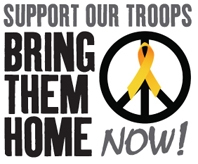
In my short life, the United States has been continuously enmeshed in wars, big and small. The purpose, besides funding the military complex, is unclear.
Are we for Balkanization, or for the preservation of national state's status quo? Are we against secret or entangling alliances? Have we learned the lessons of World Wars I and II?
Why did the U.S. enter the world stage in WWI? This is salient to what is spooling out in what we are calling the Syrian Civil War. The situation is similar to that of the Balkans in August, 1914 when the Western world tore itself apart over an insignificant assassination in Sarajevo. (Interestingly, a U.S. combat unit presence remains in Kosovo under the aegis, "peacekeeping".)
As in the Balkans of 1914, there is a similar fault line in Syria which could rupture into a regional war. One little spark (like the self-immolation of Tunisian fruit seller Mohammed Bouazizi) can set off the tinderbox of the one reality: this is a highly factionalized region, now as then
Did U.S. leaders fail to recognize this before destabilizing the region by invading Iraq? What has happened to realpolitik? For what reason did the U.S. rush in then, and why would they do so now?
Does it matter if their governments are democratic, autocratic, theocratic, Sunni, Shi'ia or any combination thereof? If so, to whom? Of what strategic concern is this to the U.S. government? What progress has been made since the wars in the Crimea and the Balkans?
WWI and II solved nothing; there were no victors, only losers. What did the U.S. gain from either war that we didn't have or wouldn't have if we had stayed strictly neutral?
Why has the irrational response of war become a rational choice in our current condition? What democratic nation can prosper by maintaining a war footing for 100+ years?
Labels: Balkanization, military industrial complex, Sarajevo 1914, Syrian civil war, war face
 posted by rangeragainstwar at 5:16 PM
0 comments
posted by rangeragainstwar at 5:16 PM
0 comments